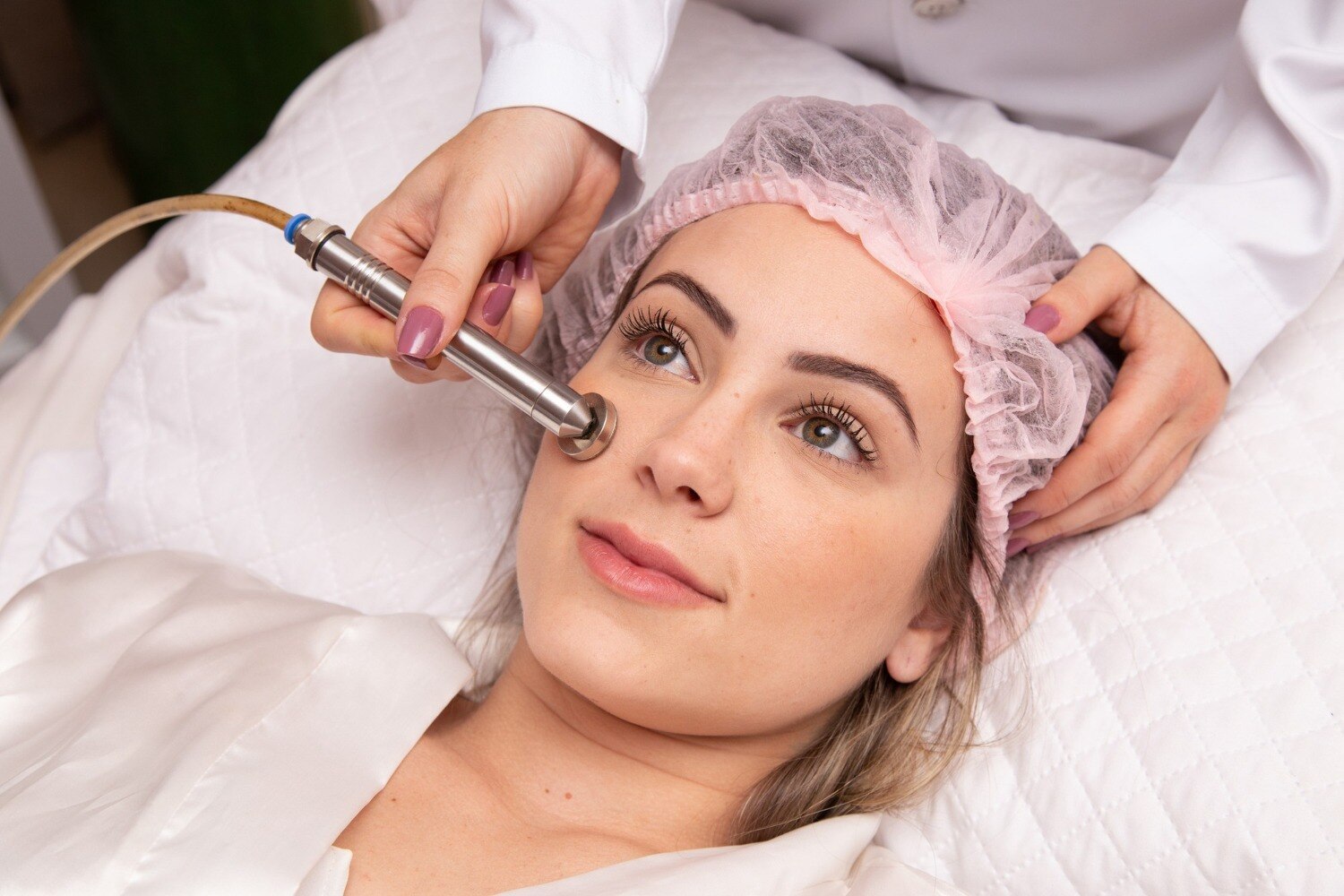
A chemical peel appointment involves more than painting an acid onto the skin: the clinician first decides whether treatment is safe, then controls the solution, exposure and endpoint. By the end, you will know what happens at each stage, what sensations are expected, how recovery differs by peel depth, and which questions to ask before booking.
Key takeaways
- Ask about peel depth, ingredients, risks, and expected recovery before treatment.
- Stop active retinoids and exfoliants only when your clinician instructs you.
- Mild warmth and tingling differ from severe burning or escalating pain.
- Protect peeling skin from sun and never pull away loose flakes.
Before the appointment: consultation, skin assessment and preparation
A clinician checks whether your skin is healthy enough to heal, whether a chemical peel treatment matches your concern, and whether its risks are acceptable for your skin type and medical history.
The assessment also tests whether your goal is realistic: a peel can improve some fine lines, uneven pigmentation, rough texture and acne-related changes, but it will not tighten sagging skin or erase deep folds like surgery.
1. Your clinician reviews your skin type, pigmentation history, tendency to develop dark marks, cold-sore history, allergies, medications and previous procedures such as lasers, waxing or other peels.
2. They look for active acne inflammation, infection, open wounds, sunburn, eczema or another uncontrolled inflammatory skin condition. Treatment is postponed when the skin barrier is damaged because irritation and pigment changes can worsen.
3. Tell the clinician about a recent course of isotretinoin, pregnancy, immune problems and medicines that increase sensitivity or affect healing. A recent isotretinoin course can change when treatment is appropriate.
4. The clinician chooses the acid, concentration, number of coats and expected peel depth according to your concern and skin response. Darker skin can receive skin rejuvenation treatment, but conservative settings, careful aftercare and sometimes a test spot are important because post-inflammatory pigmentation is more likely.
Before the appointment, follow the clinic’s instructions about sun exposure and irritating products such as retinoids, exfoliating acids and scrubs. Do not conceal a cold sore or recent procedure; that information changes the safety decision.
What happens in the treatment room, step by step
The chemical peel for skin rejuvenation process moves through controlled stages rather than a fixed “leave-on” time. The clinician adjusts the agent, concentration, number of coats and contact time to the treatment area and intended depth.
1. Cleanse the skin to remove makeup, sweat and surface debris. The clinician then degreases it, often with an alcohol-based or acetone-based solution, so oil does not block even penetration.
2. Protect sensitive borders with ointment or gauze. The clinician usually avoids the eyelids, nostril creases and lips unless those areas are specifically included.
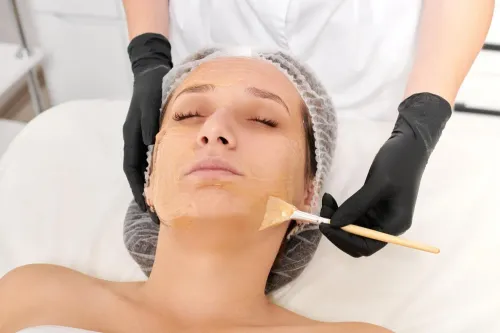
3. Apply the peel in a measured pattern, such as across the forehead, cheeks, nose and chin. You may feel warmth, tingling or stinging, followed by tightness; report intense or escalating burning immediately.
4. Watch the skin’s endpoint instead of relying only on a timer. Depending on the solution, the clinician may see redness, uniform frosting or another visible change before removing the peel or applying a neutralising solution. Not every peel requires neutralisation.
5. Finish with a bland moisturizer or ointment to support the barrier. The clinician applies or recommends broad-spectrum sunscreen and explains when to restart retinoids, acids, scrubs and other irritating products.
The chemical peel process itself may take only several minutes after preparation, but the clinician spends time checking the skin between coats and before you leave. Do not rub, scrub or pick at treated skin afterward.
Peel depth, expected sensations and safety signals
Peel depth in the chemical peel for skin rejuvenation process depends on the agent, concentration, number of coats, contact time and your skin’s response. A stronger peel removes more layers, but increases discomfort, supervision, pigment changes, scarring and recovery time.
| Depth | Strength and sensation | Supervision, risks and downtime |
|---|---|---|
| Superficial | Glycolic, salicylic or lactic acid, or Jessner solution affects the epidermis. Expect warmth, tingling or brief stinging, followed by redness and flaking. | Usually performed without anaesthesia. Pigment darkening or lightening can occur, especially in darker skin. Scaling often settles within several days. |
| Medium-depth | TCA reaches deeper into the epidermis and papillary dermis. Burning can be stronger, with tightness, marked redness, swelling, frosting, crusting and peeling. | Requires close clinical control and stronger pain relief when needed. Healing commonly takes about 7 to 14 days; infection, scarring and pigment changes are more significant risks. |
| Deep | Phenol or stronger TCA removes substantially more skin. Pain control or anaesthesia is required, and the treatment demands intensive medical supervision. | Surface healing takes about 2 to 3 weeks or longer, with redness that can persist. Scarring, infection, lasting pigment change and other serious complications are more likely. |
During a chemical peel treatment, cooling from a fan or compress can ease superficial discomfort. Frosting can be an intended endpoint, but escalating pain, blistering, uneven severe whitening, rapidly increasing swelling, pus, fever or breathing difficulty is not a normal sensation; alert the clinician immediately.
Darker skin needs conservative selection and experienced aftercare, not a guarantee of zero pigment risk.
What chemical peel recovery looks and feels like
Warmth, tightness and redness are common immediately after a peel. As the treated layer sheds, your skin can feel dry, sensitive or mildly itchy, and visible peeling may start later rather than straight away. The duration depends on peel depth and your individual response.
During chemical peel recovery:
- Let loose skin fall away on its own; pulling or scrubbing can cause wounds, infection and prolonged dark marks.
- Apply the bland moisturiser or ointment recommended by your clinician, and protect the area from direct sun with the advised sunscreen.
- Pause retinoids, exfoliating acids, benzoyl peroxide, fragranced products and other irritants until your clinician confirms that the skin barrier has recovered.
- Expect pinkness, increased sensitivity or uneven pigment to outlast the visible peeling. Skin can look healed while deeper sensitivity or post-inflammatory darkening is still developing.
Contact the clinician promptly if pain becomes severe or worsens instead of settling, or if swelling, blistering, open sores, pus or spreading redness appears. Fever, facial swelling that affects the eyes, or any vision change needs urgent medical attention.
Report marked darkening, pale patches or a rash that extends beyond the treated area rather than assuming it is normal shedding. People with darker skin should report pigment changes early, since prompt assessment can limit complications. Resuming aggressive products too soon can undo the intended skin rejuvenation and prolong recovery.
How treatment plans, intervals and provider decisions are made
A treatment plan may use one peel for a limited concern, while superficial skin rejuvenation commonly requires three to six sessions. Medium-depth peels often need fewer treatments, and deep peels are usually planned as a single procedure because chemical peel recovery is longer and complications carry greater consequences.
Intervals follow healing, not a calendar template. Superficial treatments are often spaced several weeks apart; medium-depth treatments need substantially longer intervals, and deep treatment may require months before reassessment. Do not repeat a peel while pinkness, sensitivity, active scaling or pigment changes remain.
Compare clinics on these points:
| Clinic factor | What to verify | Why it matters |
|---|---|---|
| Provider qualifications | A dermatologist or medically trained clinician performs the assessment and treatment | A stronger peel needs medical judgment |
| Treatment plan | Named acid, concentration, coats, contact time and endpoint are documented | “Chemical peel” alone does not describe strength |
| Skin-type experience | Ask how darker skin is assessed and whether a test spot is appropriate | Irritation can trigger prolonged pigmentation |
| Follow-up | Written aftercare, review timing and an emergency contact are provided | Problems can appear after the surface looks healed |
| Alternatives | The clinician explains when microneedling or no peel is safer | Peels do not correct sagging or deep folds |
At Skin Harmony -Trusted Skin Clinic | 08048056382, use the consultation to ask how the proposed interval changes if recovery is slower than expected. Choose the provider who explains those decisions clearly rather than promising a fixed result.
Related service
Pigmentation body Chemical peels are effective, minimally invasive treatments for body acne, pigmentation, and acanthosis nigricans. View service → |
Frequently asked questions
What happens before a chemical peel treatment?
The clinician reviews your concerns, medical history, medicines, skincare products, previous treatments, and healing risks. They examine your skin and give preparation instructions.
What happens during the chemical peel process?
The clinician cleans and degreases your skin, protects sensitive areas, applies the peel in controlled passes, monitors your response, and removes or neutralises it according to the product used.
How does peel depth affect sensations and recovery?
Superficial peels usually cause mild warmth, tingling, redness, and light flaking. Deeper peels create more visible inflammation and peeling, with longer recovery and stricter aftercare.
What does chemical peel recovery feel like?
Expect tightness, redness, dryness, sensitivity, or peeling based on the peel depth. Do not pick the skin; use the recommended cleanser, moisturiser, and broad-spectrum sunscreen.
How are treatment intervals and plans decided?
The provider considers your skin concern, peel depth, response to earlier sessions, healing speed, skin tone, medicines, and risk of irritation before setting the next interval.
Keywords